

Why are some leaders reticent to say, "I'm sorry?"

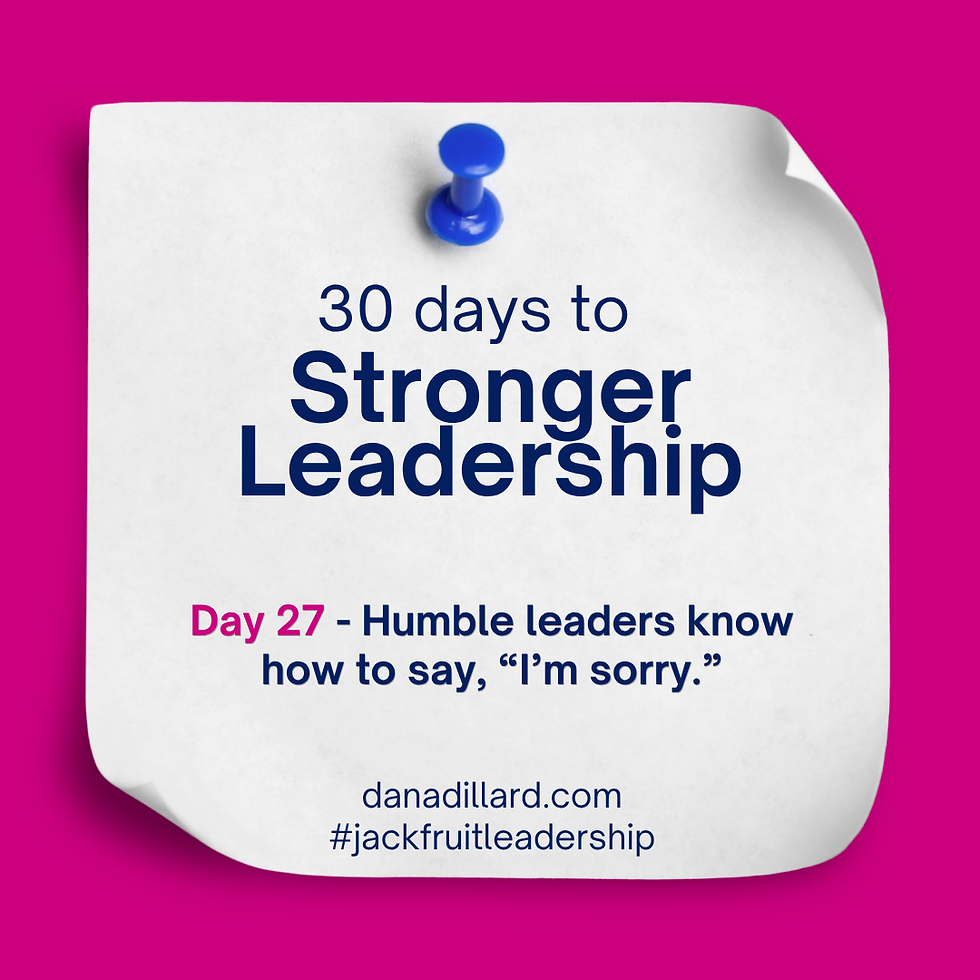
Have you ever worked for a leader who would never apologize? No matter what happened - missed communication, harsh tone, poor decision, unfair reaction - the words “I’m sorry” never came.
That reluctance often comes from a mistaken belief:
“If I apologize, people will see me as weak, flawed, or less capable.”
But in reality, the opposite is usually true. Leaders who apologize appropriately are often viewed as:
* More trustworthy
* More emotionally intelligent
* More self-aware
* More human
An apology does not weaken leadership credibility. Avoiding accountability does. One of the clearest signs of emotional intelligence is the ability to recognize when your actions, words, or tone negatively impacted someone else - and then address it directly.
Simple statements can have a powerful impact:
“I’m sorry I missed that. Thank you for catching it.”
“I’m sorry. My tone was harsher than it should have been.”
“I handled that conversation poorly, and I appreciate your patience.”
Those moments build trust because they show humility, maturity, and self-awareness. Research around emotional intelligence often connects resistance to apologizing with fear, shame, or a need to maintain control.
Some leaders believe they must appear perfect to maintain authority. But perfection is not what teams are looking for. People want leaders who are authentic, accountable, and emotionally steady enough to admit when they have done something wrong. The strongest leaders understand this:
Vulnerability, when paired with accountability, creates connection, not weakness.


Comments